

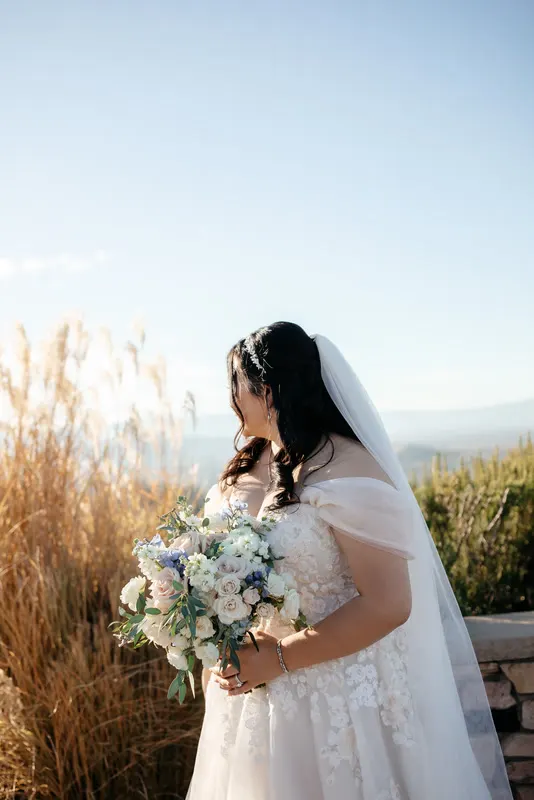
If you shoot weddings in Utah, your season probably looks like this: a bridals session at the salt flats in May, a midday outdoor ceremony with a family group that fills the frame in June, a Moab elopement in late summer and a run of September Saturdays that leaves you editing into November. Then, in winter, a lodge wedding in Park City with snow that photographs blue.
This page is for the photographers and filmmakers who shoot those days. It covers the editing problems that are specific to Utah light and Utah wedding days, and how we handle them when you send us the files. We are BackstagePost, a post-production team in Pakistan. We cull, color and retouch galleries and edit wedding films under your name, in 7 business days.
Why Utah studios have more editing than most
A few public numbers explain why editing piles up here.
- Lots of weddings. CDC data for 2022 puts Utah’s marriage rate at 9.9 per 1,000 people, against a US rate of 6.2.
- Lots of photographers. The Bureau of Labor Statistics (May 2023) counts about 950 photographers employed in Utah, the third-highest concentration of any state, with a location quotient of 1.61. That count leaves out the self-employed, which is most wedding photographers, so the real number is higher.
- Young couples. American Community Survey figures compiled by Bowling Green State University’s NCFMR put Utah’s median age at first marriage at 27.2 for men and 25.2 for women in 2024, the lowest in the country (US medians: 30.8 and 28.8).
- A tight season. A Utah planner quoted by The Knot puts peak season at mid-May to mid-October, with September the busiest month and August next.
Put together, that is a lot of weddings packed into five months, and a lot of couples who often book more than one session.
What a Utah wedding looks like to an editor
Salt flats, mountains and snow
The Bonneville Salt Flats are a favorite for bridals. The editing problem is white on white: a white dress on white ground under a sun that bounces off everything. Highlights clip, faces go flat and the salt shifts between blue and gray from frame to frame. We hold texture in the dress, keep the salt neutral across the whole set and lift faces with local masks. Our full walkthrough is in editing salt flats bridals.
Up in the Wasatch, the challenge is green and blue: canyon greens that go neon and big skies that over-saturate. See how we kept greens true in Ceremony under the peaks and handled overcast light in the mountain ranch wedding. Winter adds snow, which reads blue in shade, and ski-lodge interiors lit by warm tungsten. That has its own guide: Park City winter wedding editing.
Desert and red rock
Moab, Zion, St. George and Lake Powell give you incredible backdrops and a constant orange bounce. Light reflecting off sandstone warms skin until couples look sunburned or spray-tanned, while the rock itself needs to stay rich. We separate the two with masks so the rock keeps its color and skin goes back to what it looked like in person. The method is in red rock skin tones, and you can see a desert grade in Desert vows and a backyard pool party.
Midday ceremonies and big family formals
Plenty of Utah wedding days put the ceremony, the exit and the family groups in late morning or midday sun, with little shade. Dresses clip, faces get hard shadows and squinting turns up in every group. Then come the family groups themselves, often big extended families in one frame.
Culling those groups is slow, careful work. Every face in every frame of a burst needs checking. A garden ceremony or an evening reception often follows, which puts several kinds of light into one gallery. We cull the groups by hand and grade the whole day to one look. More in midday light and big family formals.
Bridals and formals sessions
Many Utah couples do a bridals or formals session in full wedding attire a few weeks before the wedding, so they can have a first look and use locations without timeline pressure. That means two or three sessions per couple that all need to match the wedding gallery and the album. We grade every session from the same references. See one style across bridals, formals and the wedding.
Packages that fit a Utah season
All prices are per project, in USD, with no subscription. Standard turnaround is 7 business days from footage received.
| What you shot | Package | Price |
|---|---|---|
| Bridals, formals, engagement or a small elopement | Engagement gallery, 100–200 images from up to 1,000 raws | $50 |
| Wedding day, getting ready through reception | Wedding gallery, 300–500 images from up to 3,000 raws | $80 |
| Wedding film | Highlight (5–8 min) $100, Feature (15–40 min) $150, both $250 | from $100 |
| Photo and video team, same day | Essential $150, Signature $200, Complete $300, one grade across stills and film | from $150 |
| Elopement with a drone | Drone-only edit add-on | $30 |
| Reels for the couple | Social reels, three 9:16 cuts | $40 |
| Sneak peeks or a tight deadline | Rush, 72 hours | +50% |
Culling is included in both gallery tiers. Big family-formals days and multi-day weddings are charged at the same standard package price, and the Wedding gallery’s 3,000 raws cover the whole wedding, all days together. Studios sending five or more projects a month can move to a monthly plan at 15% off. Full details are on packages.
Your season, our clock
The Utah calendar is uneven. A studio might shoot two weddings in March and eight in September. A monthly editing subscription can sit idle half the year, so we price per wedding and you only pay in the months you send work.
Here is what 7 business days looks like on a gallery:
- Day 1: we download from your link, check every file opens and confirm the brief.
- Days 1–2: test frames graded against your preset and three reference frames.
- Days 2–3: cull to the count in your package.
- Days 3–6: grade and retouch, then a full consistency check.
- Day 7: gallery and Lightroom catalog delivered.
Utah is on Mountain Time, 11 hours behind Pakistan in summer and 12 in winter. The gap matters less than it sounds, because our editing team works 24 hours a day, in shifts, so a link is picked up soon after it arrives. That doesn’t shorten the turnaround, which is still 7 business days (or 72 hours on rush). The full day-by-day plan is on how it works.
Under your name, and nobody else’s
Your couples hired you. We stay out of sight.
- We never show your work in our portfolio without your written permission. No credit, no mention.
- Only the editor on your project sees the files.
- Files stay in your own storage. We work from your Dropbox, Google Drive, WeTransfer, pCloud or Box link.
- You get the Lightroom catalog or the Premiere Pro or DaVinci Resolve project back, so you can make your own final tweaks.
Read the details on confidentiality.
Why a team in Pakistan
Skilled editors, a team that works around the clock, and prices a studio can book every week. You keep the client, the name and the final say. We work in English, by email, and we edit in Lightroom Classic, Premiere Pro and DaVinci Resolve, and hand back files you can open in the same apps.
What we edit, and what we don’t
We grade, cull and retouch what you photographed. Retouching stays with skin, stray distractions and light. We never alter clothing or body shape. On films, you choose the music and we cut to it. The complete list is on what we edit, and you can see finished galleries and films on our work, including white-on-white in a white barn wedding gallery and bright windows behind the couple in the glass-walled venue ceremony.
What happens next
- Start the free trial. One project per studio, any Gallery tier or the Highlight film, no card. A bridals session from this season is a good test because it is small and you know exactly how you want it to look. Start your free trial.
- Send the link and your references. Your footage link, your preset and three frames you have already edited.
- Judge the match. The gallery comes back in 7 business days. Compare it with your own work before you send anything else.
If you would rather plan the season first, read planning a Utah wedding season without falling behind.