

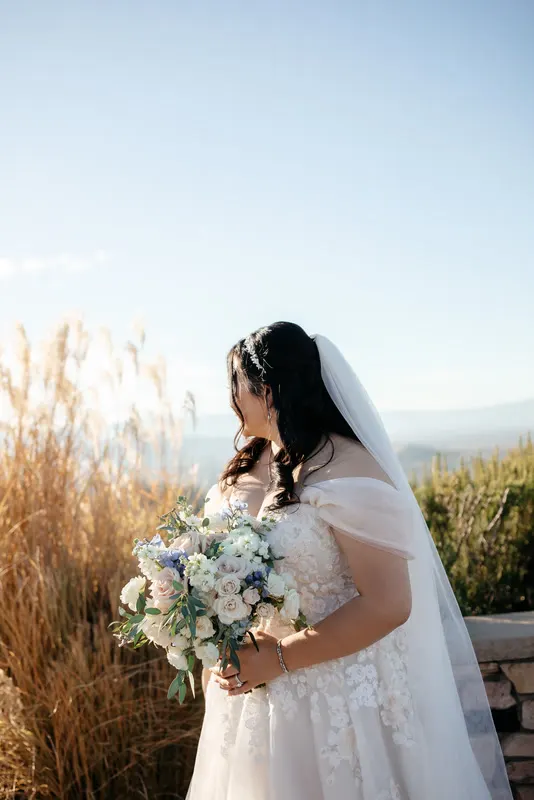
You come back from a villa near Siena with a card full of beautiful light, open the first set in Lightroom and everything looks like it was shot through a jar of honey. Or you come back from Lake Como and the water has gone a colour you would never pick, somewhere between swimming pool and peppermint.
Both are common, and both are fixable. They just need a different approach from the one your preset was built for.
Why Italy is where this matters most
Italy is the destination most of your English-speaking couples are likely to ask about. Bridebook’s UK Wedding Report 2026 found that among UK couples who considered marrying abroad in Europe, Italy came first at 21%, just ahead of Greece at 20% (as reported by Travel Radar). An AP report on Italy’s destination wedding market said foreign weddings in Italy exceeded 15,100 in 2024, up 11.4%, with US couples close to a third of them (AP, via Yahoo).
Within Italy, Tuscany led with 21% of foreign couples in ENIT’s 2022 data, followed by Lombardy (which includes Lake Como), Campania (the Amalfi Coast), Puglia, Sicily and Lazio, according to The Local Italy.
So if you shoot destination work in Europe, Tuscan and lakeside light are likely to be a big part of your season.
Stone, terracotta and cypress: the Tuscan problem
Tuscan venues are warm by design. Pietra serena, travertine, terracotta roof tiles and floors, ochre walls. In late afternoon all of it reflects warm light onto your couple. The result in the raw file is usually one of two things: faces that are too orange, or a white balance correction that fixes the faces and kills the place.
What works better than one global white balance:
- Set white balance on skin, not on the wall. Use a cheek or the side of the neck in even light. The villa can stay warmer than neutral; that is what it looked like.
- Separate orange from skin in HSL. Lower orange saturation a little and raise orange luminance slightly. Skin tones live in orange too, so make small moves and check faces at 100%.
- Mask the walls if you need to. A range mask on luminance or colour lets you calm a glowing wall without touching the people in front of it.
- Keep cypress green, not olive drab. Cypress and olive trees go muddy when a warm grade is pushed. Lift green luminance a touch and nudge the hue towards true green.
- Watch the dress. A white dress against honey stone picks up colour. It should read as white in daylight frames, even if it warms up at sunset.
Lake water and skin at Como
Lake Como brings the opposite problem. Water and sky fill the frame, and the camera often records them as aqua or teal. The reflected light is cool, so skin near the water can turn grey or slightly green.
The sequence we use on lakeside portraits:
- White balance for skin first.
- Lower aqua saturation and shift its hue slightly towards blue, so the lake looks like deep water rather than a pool.
- Check the blues in the sky. Pushing blue saturation to make the sky dramatic often brings the lake with it.
- Lift skin gently with a local adjustment if the faces have gone cool from the water.
- Hold the highlights on villa facades and boat wakes. Bright white stucco across the lake is easy to clip.
Boats are worth a mention of their own. Many Como couples arrive or leave by boat, and those frames combine moving water, spray, bright sky and faces under a canopy or in full sun. Hold the highlights on the water first, lift faces locally, and keep the lake the same colour as it was in the portraits from the terrace. A boat exit that suddenly looks colder than the rest of the gallery is easy to spot.
Lakeside venues also tend to mix light inside: frescoed ceilings, chandeliers, window light off the water. Treat interior scenes as their own group in the grade, then bring them back into line with the anchor scene.
Fine-art or editorial: decide before you grade
Italy attracts two quite different looks, and couples often book you for one of them.
| Look | What it usually means in the grade |
|---|---|
| Fine-art | Soft contrast, lifted shadows, warm but muted colour, pale greens, creamy whites |
| Editorial | Deeper contrast, cleaner whites, richer colour, crisper skin |
| Film emulation | Either of the above with grain, a characteristic colour response and gentler highlight roll-off |
None of these is right or wrong. What matters is that the whole gallery stays in one of them. A common mistake in destination sets is a fine-art ceremony followed by an editorial reception, because the reception light forced heavier corrections.
If your style is film emulation, tell us in the brief which stock or preset you are emulating, and send frames from a real wedding where you are happy with it. We match your look, not a house style.
How we match your style for an Italian wedding
Every project starts the same way, whatever the country:
- What you send: a footage link (Dropbox, Google Drive, WeTransfer, pCloud or Box), your preset or LUT, three to five finished frames and a short brief.
- Match first: test frames are graded against your preset and references and checked side by side before we work through the set.
- Cull: if you send the full card, we cull to your package count. A Wedding gallery is 300 to 500 images from up to 3,000 raws, and an Engagement gallery is 100 to 200 from up to 1,000.
- Grade and retouch: every frame graded to the matched look, with skin and distraction clean-up on close portraits.
- Quality check: a final pass through the whole set for consistency across scenes and light.
- Delivery: the gallery and the Lightroom catalogue, so you can change anything yourself.
The Wedding gallery is €75 and the Engagement gallery €45. Delivery is seven business days from when your link works and the brief is complete, and public holidays in your country are not counted. Rush is 72 hours for +50%.
A note on the films
If you or your filmmaker also shot the wedding, the same light problems turn up on video, with less room to fix them because most wedding footage carries less colour information than a raw photo file. Our Gallery + Film packages grade the stills and the films side by side so the villa looks like the same villa in both. Signature, the Wedding gallery plus a 15 to 40 minute Feature film with a one-minute teaser, is €180.
Your next step
Send one Italian wedding and judge the result before you pay for anything.
- Start the free trial: any Gallery tier or the Highlight film, free for your first project.
- See every package and add-on on packages, fixed in euros.
- Check the day-by-day plan on how it works and the full list of shoot types in what we edit.
- Watch how hard noon sun and a bright ballroom were graded in our garden estate wedding film, or browse all work.
- Read our data processing terms, confidentiality page and FAQ.
For more on Italy, read the Italy wedding editing guide, and for multi-day weekends, our post on grading a destination wedding as one set.